
BAC falling
You may still have alcohol in your system. How alert you feel does not prove that you are safe to drive.
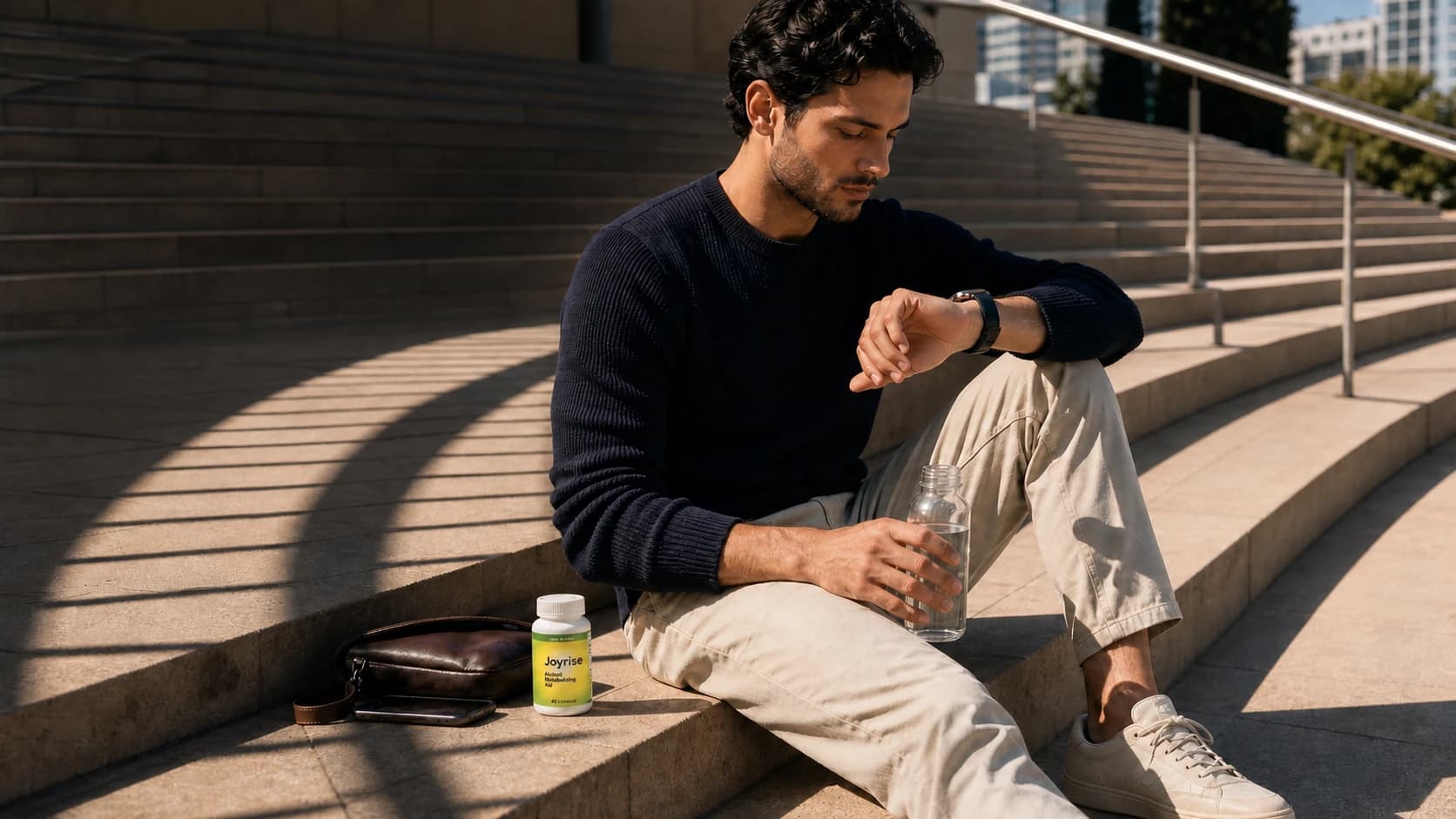
The honest duration guide
Often up to 24 hours.
Sometimes longer.
Symptoms often peak near the point when BAC returns to about zero. The finish line varies—and no supplement, coffee, or shower speeds alcohol clearance.
The symptom horizon
This is a sequence, not a promise. The same person can have a different timeline from one occasion to the next.
You may still have alcohol in your system. How alert you feel does not prove that you are safe to drive.
Hangover symptoms often peak around the time BAC returns to about zero.
Disrupted sleep, mild dehydration, stomach irritation, inflammation, and rebound effects can arrive together.
Symptoms may continue for 24 hours or longer. Reassess attention, coordination, and the demands on your day.
Alcohol recovery timeline
General guide based on NIAAA, Mayo Clinic, and Cleveland Clinic education. Individual timing varies with metabolism, sleep, food, hydration, and amount consumed.
| Time window | Typical experience | What helps |
|---|---|---|
| During drinking | Liver is actively converting ethanol → acetaldehyde → acetate via the ADH and ALDH enzyme pathways. Hydration is already dropping. | Pace yourself, eat food, alternate alcoholic drinks with water. |
| 0–6 hours after last drink | Blood alcohol still elevated. Sleep is disrupted; body continues metabolizing ethanol and acetaldehyde. | Water, a light snack, and rest. |
| 6–12 hours | Peak symptoms for many people: headache, dehydration, fatigue, nausea, brain fog. | Steady hydration, balanced meal, more sleep if possible. See fast hangover relief support. |
| 12–24 hours | Most symptoms gradually fade. Some lingering tiredness or low mood is common. | Gentle movement, nutritious food, no additional alcohol. |
| 24+ hours / when to seek medical help | A small share of people report a second-day "hangxiety" or fatigue tail, especially after heavy drinking or poor sleep. Symptoms that are severe, unusual, or persistent are not a normal hangover. | Rest, hydration, normal eating. Seek medical help for confusion, repeated vomiting, seizures, slow or irregular breathing, severe pain, or symptoms beyond 24 hours. |
Why your clock differs
There is no calculator that can tell you exactly when your symptoms will end. These factors help explain the variation.
How much and how quickly you drank shape exposure.
Fragmented sleep can make the same hours feel very different.
Mild dehydration may add thirst, fatigue, and headache.
Alcohol can irritate the stomach lining and increase acid release.
Congeners and individual sensitivities may affect some people.
Metabolism, health, medications, and personal response vary.
Duration drivers
When people search “how long can a hangover last”, they are usually noticing one of these patterns. Each one stretches the recovery timeline beyond the typical 24-hour window.
Be useful, not magical
Replace fluids gradually.
If your stomach tolerates it.
Give disrupted sleep room to recover.
May change alertness, not BAC.
Does not make alcohol clear faster.
Neither is a sober-up switch.
This is not a wait-it-out moment
Call 911 immediately if someone has any critical warning sign. Do not wait for all of them to appear.
Call 911Where Joyrise fits
Joyrise is designed to support alcohol metabolism. Follow the exact product label and take one serving in one window—before, during, or after alcohol.
Straight answers
There is no universal finish time. According to NIAAA, symptoms often peak when blood alcohol concentration returns to about zero and can last 24 hours or longer.
Alcohol may still be clearing while you sleep. As BAC approaches zero, disrupted sleep, mild dehydration, stomach irritation, inflammation, and rebound effects can overlap.
Those choices may change how you feel, but none has been shown to make alcohol clear faster. Only time lowers BAC.
Yes. NIAAA notes that symptoms can last 24 hours or longer. If symptoms are severe, unusual, worsening, or you are concerned, contact a healthcare professional.
Call 911 for confusion or stupor, inability to wake, seizures, vomiting with reduced responsiveness, slow or irregular breathing, clammy skin, or bluish or very pale skin. Do not wait for every sign.
Joyrise is a dietary supplement designed to support alcohol metabolism. Follow the exact label: one serving is 3 capsules, taken in one window before, during, or after alcohol. It does not lower BAC or reverse impairment.
Most hangovers resolve within about 24 hours of when blood alcohol returns to zero, according to the NIAAA, Mayo Clinic, and Cleveland Clinic. Many people feel symptoms peak 6–12 hours after their last drink and gradually fade through hours 12–24. Timing varies with the amount of alcohol consumed, hydration, sleep, food, body size, medications, and underlying health.
Some people report a tail of fatigue, low mood, or sleep disruption into a second day after heavy drinking, poor sleep, or significant dehydration. Symptoms that are severe, unusual, or last well beyond 24 hours should be treated as a medical concern, not a normal hangover.
Standard hangover symptoms typically improve well inside 24 hours. A two-day tail can happen — usually tied to heavy drinking, dehydration, or poor sleep — but persistent symptoms past 48–72 hours are not typical and warrant a conversation with a healthcare provider.
A typical timeline: during drinking the liver actively metabolizes ethanol into acetaldehyde and then acetate; 0–6 hours after the last drink blood alcohol is still elevated and sleep is disrupted; 6–12 hours brings peak symptoms for many people; 12–24 hours symptoms fade for most; beyond 24 hours, residual tiredness or mood can linger after heavy nights. Hydration, food, and sleep set the pace.
Plan for tomorrow
Water. Food if tolerated. Rest. A safe ride. And enough time.
Build a practical recovery plan