
Hero ingredient
DHM
A vine-tea flavonoid with substantial preclinical literature and limited human outcome evidence.

The Joyrise evidence room
DHM research is promising, complicated, and mostly preclinical. We keep the ingredient, study type, formulation, and limitation together so you can see what each source can—and cannot—support.
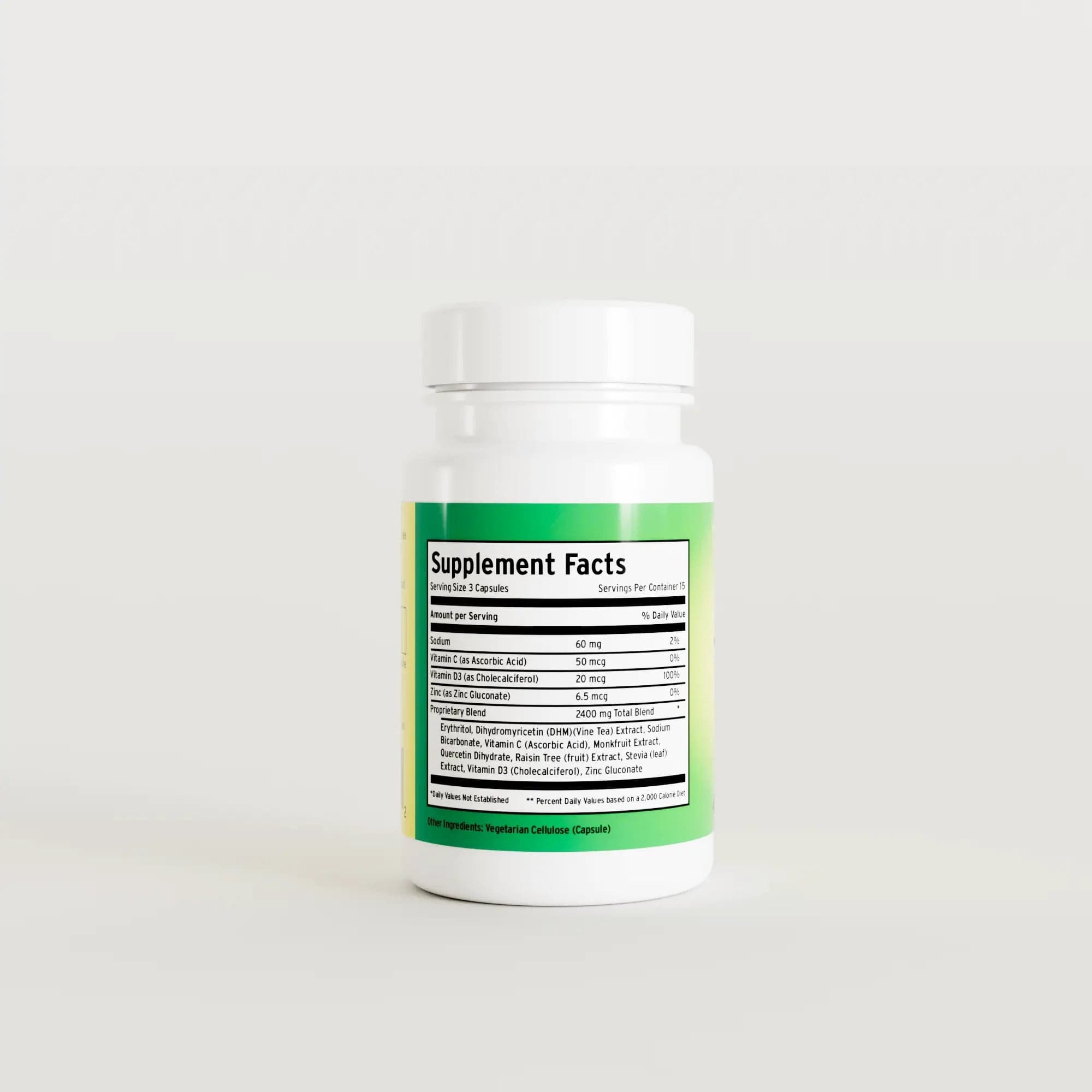
The formula, without the fog
Start with the hero ingredient, then keep every supporting ingredient in its proper role. The package for the format you buy is always the source of truth.
Inspect the labelVine tea flavonoid
DHM has been studied across receptor, alcohol-related, oxidative-stress, and pharmacokinetic models. Most of that evidence is preclinical.
The better questionWhat dose, route, model, formulation, and endpoint were actually studied?
A vine-tea flavonoid with substantial preclinical literature and limited human outcome evidence.
Antioxidant nutrients included in the formula; their presence is not proof of a next-day outcome.
A traditional botanical ingredient. Product labels and serving sizes vary by format.
Included in select labels for normal nutrient functions, not as a treatment for alcohol effects.
 Editorial concept · not an absorption measurement
Bioavailability, visualized
Preclinical literature identifies limited absorption and rapid clearance as meaningful variables. Joyrise's patented formulation was designed around that delivery problem.
“Intended to address” is deliberate. A patent protects an invention; it does not independently establish a clinical result or prove superiority over every other product.
Six active research questions
Each row tells you what scientists have examined and the evidence ceiling attached to it. Tap any topic to continue into the source index.
Mechanistic evidence is not a human clinical result.
Dose, route, sex, and formulation can change measured exposure.
Published findings do not all agree—and that disagreement matters.
A research theme, not proof that Joyrise prevents cellular damage in people.
Pathway research does not establish a human anti-inflammatory claim.
Joyrise-specific, well-controlled human outcome trials remain the key evidence gap.

The source ledger
Inspect the model, dose, route, and endpoint before deciding how much a finding can support.
Injected DHM was studied in rats and receptor activity was studied in cells. This was not a human trial of Joyrise.
Researchers identified DHM and metabolites in mice and emphasized that route, sex, limited absorption, and rapid clearance matter.
A separate study found no change in in-vivo alcohol metabolism and called the proposed mechanism uncertain.
The formula facts
Directions and serving size vary by format. Use the exact label for the product you buy, and speak with a clinician if you are pregnant, nursing, taking medication, or managing a medical condition.
Joyrise does not reduce impairment or BAC and does not make drinking safer. Never drink and drive.