Free U.S. Shipping
Evidence-first answer

Is there a hangover cure?
No — and here is what does help.

Short answer: There is no scientifically proven hangover cure other than time. The practical supportive steps are hydration, food as tolerated, rest, pacing, and drinking less. Nothing on this page — including our own product — cures, prevents or treats a hangover.

Last reviewed · Written by the Joyrise editorial team · Reviewed by the Joyrise product and compliance team

Disclosure: this page is published by Joyrise, which sells DHM-based dietary supplements. We are telling you plainly that no supplement, including ours, is a cure.

Short answer

Short answer

There is no scientifically proven hangover cure other than time. The National Institute on Alcohol Abuse and Alcoholism describes time as the only thing that reliably resolves a hangover, and drinking less or not at all as the only reliable way to avoid one. Practical supportive steps while it passes are hydration, food as tolerated, rest, pacing your drinks, and drinking less overall.

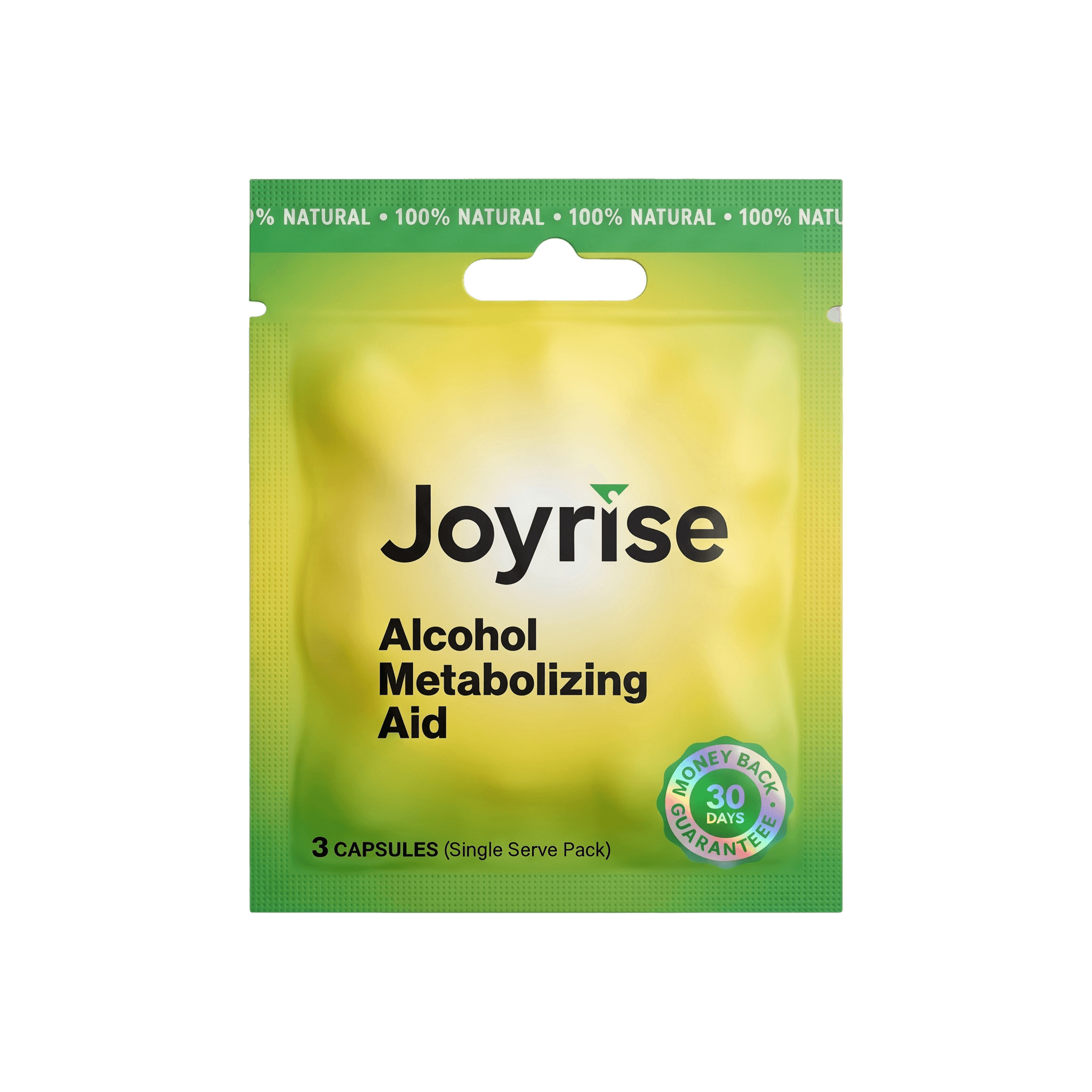
Dietary supplements are not medicine and cannot legally claim to cure, prevent or treat a hangover — the FDA has issued warning letters to companies that did. Joyrise is a DHM-based dietary supplement for adults 21+ intended to support the body's normal alcohol-metabolism pathways alongside those steps, not to replace them, sober anyone up, reduce impairment, or make drinking safe.

Related reading: what DHM is, the research summary, how long a hangover lasts, and how a supplement differs from an over-the-counter product.

These statements have not been evaluated by the Food and Drug Administration. Joyrise is a dietary supplement and is not intended to diagnose, treat, cure, or prevent any disease. Adults 21+. Always drink responsibly; individual experiences may vary.

Supportive care

What actually helps.

None of the items below is a cure. They are the supportive steps with the clearest rationale while a hangover runs its course, plus the one variable that genuinely changes the outcome: how much you drink.

Time

The only thing that resolves it

A hangover ends when your body has finished processing what you drank and has rested. NIAAA is explicit that time is what resolves a hangover — no product shortens that.

Fluids

Supportive

Alcohol promotes fluid loss, and dehydration contributes to headache and thirst. Water or an electrolyte drink is sensible supportive care; it is not a treatment.

Food as tolerated

Supportive

Eating something you can keep down helps with blood-sugar dips and general comfort. Eat before and while drinking too, which slows alcohol absorption.

Rest and sleep

Supportive

Alcohol disrupts sleep quality, and tiredness is a large part of how a hangover feels. Sleeping it off is genuinely one of the more useful things you can do.

Pacing and drinking less

The reliable variable

The clearest predictor of how you feel tomorrow is how much you drank tonight. Alternating with water and drinking less — or not at all — is the only reliable way to avoid a hangover.

Claims to be skeptical of

What doesn't cure it.

  • “Hair of the dog”

    More alcohol delays recovery rather than ending it, and it is a pattern worth avoiding.

  • A product marketed as a cure

    FDA has issued warning letters to companies illegally selling hangover products with cure, treatment or prevention claims. No supplement may legally make them.

  • IV drips

    They deliver fluids and vitamins. That is hydration, not a cure, and it is not free of risk or cost.

  • Sweating it out

    Alcohol is processed by the liver, not the skin. Exercising while dehydrated can make you feel worse.

  • Painkillers as a default

    Over-the-counter pain relievers are drugs with alcohol-related warnings on the label. Read the drug facts panel and ask a pharmacist or doctor.

Where dietary supplements honestly fit

Dietary supplements sit in a different regulatory category from drugs. They may make structure/function statements — describing support for a normal body process — and they may not claim to diagnose, treat, cure or prevent anything. That is a legal line, and it is also an honest description of what the evidence supports.

DHM (dihydromyricetin), the most-discussed ingredient in this category, is studied in relation to alcohol-metabolism enzyme pathways and antioxidant activity, largely in laboratory and animal research. Human evidence is limited and mixed: a published review reports no demonstrated effect on alcohol metabolism in vivo, and describes possible antioxidant-related effects whose expected benefit is not proven. Read the DHM explainer and the research summary before deciding whether it interests you.

What Joyrise does and does not claim

Joyrise is a DHM-based dietary supplement for adults 21+ who choose to drink responsibly. It uses a patented DHM delivery system (U.S. Patent No. US11871770B1) engineered for absorption, is caffeine-free and vegan, is third-party tested, and is made in GMP-certified U.S. facilities. It is intended to support normal alcohol-metabolism pathways alongside hydration, food and rest.

Joyrise does not cure, prevent or treat a hangover or any disease. It does not sober anyone up, does not reduce impairment, does not make alcohol safe, and is not a reason to drink more. If you want the reliable outcome, drink less.

People also ask.

Is there a cure for a hangover?
No. There is no scientifically proven hangover cure other than time. The National Institute on Alcohol Abuse and Alcoholism (NIAAA) describes time as the only thing that reliably resolves a hangover, and drinking less or not at all as the only reliable way to avoid one. Everything else — hydration, food as tolerated, rest — is supportive care while your body does the work.
What is the best hangover cure?
There isn't one, and any product advertised as the best hangover cure is making a claim no evidence supports. The practical supportive steps are hydration, food as tolerated, rest, pacing your drinks, and drinking less overall. None of these is a cure; they simply make the waiting more comfortable.
Why does the FDA warn about hangover cure claims?
The U.S. Food and Drug Administration has sent warning letters to companies illegally selling hangover products with cure, treatment or prevention claims. Dietary supplements are not drugs: they cannot legally claim to diagnose, treat, cure or prevent any condition, including a hangover. A brand that promises a cure is telling you about its compliance standards, not its formula.
Does DHM cure a hangover?
No. DHM (dihydromyricetin) is a plant flavonoid studied in relation to alcohol-metabolism enzyme pathways and antioxidant activity, largely in preclinical work. Human evidence is limited and mixed: a published review of dihydromyricetin reports no demonstrated effect on alcohol metabolism in vivo, and describes possible antioxidant-related effects whose expected benefit is not proven. DHM is a dietary-supplement ingredient, not a treatment.
Do painkillers, IV drips or 'hair of the dog' cure a hangover?
No. Over-the-counter pain relievers are symptom-directed drugs with their own label warnings — combining alcohol with acetaminophen or with NSAIDs such as aspirin or ibuprofen carries documented risks, so read the drug facts panel and ask a pharmacist or doctor. IV drips supply fluids and vitamins but do not resolve a hangover. Drinking more alcohol only delays recovery.
What actually helps while a hangover passes?
Water and other fluids, food as tolerated, rest and sleep, and simply allowing time to pass. Going forward, pacing your drinks, eating before and while you drink, alternating with water, and drinking less are the variables with the clearest effect on how you feel the next day.
Where does Joyrise fit if nothing cures a hangover?
Joyrise is a DHM-based dietary supplement for adults 21+, not a medicine and not a cure. It is intended to support the body's normal alcohol-metabolism pathways alongside hydration, food, rest and drinking less — never as a replacement for them. Joyrise does not prevent or treat a hangover, does not sober anyone up, does not reduce impairment, and does not make drinking safe. Individual experiences vary.

References

  1. NIAAA — HangoversThe National Institute on Alcohol Abuse and Alcoholism states that time is the only thing that reliably resolves a hangover, and that the surest way to avoid one is to drink less or not at all.
  2. FDA — warning letters on illegally sold hangover productsThe U.S. Food and Drug Administration has sent warning letters to companies marketing products with illegal hangover cure, treatment or prevention claims.
  3. Dihydromyricetin review (PubMed 33656905)A published review of dihydromyricetin reports no demonstrated effect on alcohol metabolism in vivo, and notes possible antioxidant-related effects whose expected benefit is not proven.